
TikTok Monetization in 2026: How Creators Actually Earn
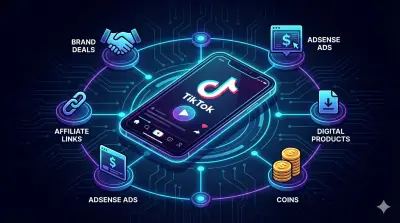
The most common assumption about TikTok money is that the app pays you for views. It does — but that payment is the smallest and least reliable piece of the picture. A creator with 50,000 tightly focused followers in the finance or software niche will often out-earn a comedy creator with 2 million, because the audience is worth more to advertisers and more likely to buy something. Follower count is a vanity metric. Revenue per viewer is what matters.
In 2026, the creators building real income treat TikTok as an attention engine, not a paycheck source. The platform gets you in front of people. What you do with that attention determines whether you actually get paid.
Here's every legitimate monetization path available right now, ordered from lowest barrier to highest earning ceiling.
Native Platform Monetization
These are the tools built directly into the TikTok app. They're the easiest to start with and the most volatile to depend on.
The Creator Rewards Program
TikTok overhauled its payment structure to favor longer content. To qualify, you need 10,000 followers and 100,000 views in the last 30 days. Crucially, the program only pays for Qualified Views on videos longer than one minute — a clip at 58 seconds earns nothing.
RPMs (Revenue Per Mille, or per 1,000 views) fluctuate a lot by niche. Finance and tech content tends to pull around $1.00 RPM. Gaming and general entertainment can drop below $0.10. A single algorithm update can cut your views by 80% overnight and take your Rewards income with it, which is exactly why treating this as your primary income source is a bad plan.
LIVE Gifting and Subscriptions
Going LIVE lets viewers send digital gifts purchased with real money, which you convert to cash at roughly a 50% platform cut. The creators who make serious money from LIVE are streaming 4 to 8 hours a day and have built strong parasocial audiences. It works best in interactive niches: gaming, tarot, speed art, live Q&A coaching. For most educational or how-to creators, it's a secondary stream at best.
Affiliate Marketing
Affiliate marketing is where most creators should start before chasing brand deals. You promote a product or tool, drop a tracking link in your bio, and earn a commission on every sale. No followers required to get started. No pitch deck. Just content that naturally references something useful.
TikTok's search behavior makes this work particularly well. A video titled "How to design a logo without Photoshop" will pull search traffic from people actively trying to solve that exact problem. If your bio links to Canva or an AI design tool with an affiliate program, a percentage of those viewers will click and sign up — and you earn a commission without a single sales pitch.
The commission structures vary significantly by niche:
| Niche | Typical Products | Commission Structure |
|---|---|---|
| B2B Software (SaaS) | Web hosting, email tools, CRM | 20-30% recurring monthly |
| Tech and Gadgets | Cameras, microphones, keyboards | 1-4% one-time (Amazon Associates) |
| Finance | Trading platforms, budgeting apps, cards | $50-$200 flat per sign-up (CPA) |
SaaS affiliate programs with recurring commissions are the best long-term play. One subscriber who stays on a $100/month tool earns you $20 to $30 every single month without any additional effort.
Brand Sponsorships and UGC
This is where predictable money starts. A brand pays you a flat fee to feature their product in your video. Most creators undercharge here because they're pricing off follower count instead of average views. The industry standard is a $20 to $30 CPM. If your videos average 50,000 views, a fair starting rate for a dedicated integration is $1,000 to $1,500.
The more interesting development in the last two years is UGC — User Generated Content. Brands need authentic-looking TikTok videos to run as paid ads, and they don't care whether the creator posting them has an audience. You film the video, hand over the file, and they post it on their own account. Rates run $150 to $500 per video for a creator with zero personal followers. It's the fastest way to get brand income before you've built an audience.
Finding UGC work: search "UGC creator" on LinkedIn or sign up for platforms like Billo or Insense. Send cold emails to DTC brands whose TikTok presence looks weak but whose products you'd genuinely use. The pitch is simple — you make the video, they run it as an ad, no exclusivity required.
Digital Products and Services
This is the highest-ceiling monetization path and the one most creators wait too long to pursue. Instead of selling your audience's attention to a brand, you sell a solution directly to your audience. Digital product margins are close to 100% once the product exists, which means your income is no longer tied to view counts at all.
What sells well depends entirely on your niche, but the categories that consistently work are templates (Notion planners, Excel budgeting sheets, video editing presets, resume templates), focused mini-courses on hyper-specific topics, and direct consulting or coaching where you charge hourly for what you give away free on TikTok.
The mistake most creators make is dropping a $500 course link in their bio and waiting. It doesn't work that way. The funnel matters:
- TikTok — short videos that solve small problems and establish that you know what you're talking about
- Lead magnet — a free PDF, checklist, or template in your bio that requires an email address to access
- Email sequence — two weeks of genuinely useful content delivered to their inbox, for free
- Offer — the paid product or service, pitched to people who already trust you
That sequence converts at 10 times the rate of a cold bio link. The email list is the asset that makes TikTok algorithm changes irrelevant — if your account gets restricted or your reach drops, you still have direct access to your audience.
For a deeper look at how to build the kind of audience that actually buys things, the TikTok growth guide from 0 to 100K followers is worth reading alongside this — growing the right audience and monetizing are more connected than most people treat them.
Building Off-Platform Assets
The creators building durable businesses in 2026 aren't banking everything on their TikTok profile. They're using TikTok traffic to grow something they own outright.
A viral TikTok video about "the best coffee shops in Islamabad" has a 2-week shelf life. A blog post on the same topic, optimized for Google search, can rank for years and earn ad revenue from every reader who finds it. Drive your TikTok audience to that post, and you're essentially converting short-form attention into long-form passive income.
The same logic applies to YouTube. A TikTok video clip repurposed to YouTube Shorts can pull viewers into longer YouTube content that earns through AdSense at significantly higher RPMs than TikTok's Creator Rewards. The content is already made — you're just distributing it to a second platform with a different monetization structure.
This is also why understanding how the TikTok algorithm works matters for monetization specifically — the creators who maintain consistent reach are the ones who can reliably send traffic to off-platform assets rather than dealing with unpredictable spikes and drops.
Monetization Mistakes Worth Avoiding
A few patterns that reliably damage accounts and trust:
Mentioning "link in bio" on every video. TikTok's algorithm is tuned to suppress content that tries to pull users off the platform. Creators who reference their bio link constantly see measurable reach drops over time. Reference it when it's genuinely relevant, not as a CTA on every post.
Taking sponsorships outside your niche. If your audience knows you for cooking content and you drop a sponsored post for a mobile RPG, engagement craters — not just on that video but on the two or three that follow it, because the algorithm reads the sudden drop in watch time as a content quality signal. Every sponsorship you take either builds or erodes the trust that makes your next offer work.
Promoting anything you haven't used. Audiences on TikTok are surprisingly good at detecting when a creator doesn't actually believe in what they're recommending. Your credibility is the only thing that makes any monetization path work — once that's gone, the revenue dries up fast regardless of follower count.
Frequently Asked Questions
- How many followers do I need to start making money on TikTok?
- Zero followers if you pursue UGC work for brands — you're creating content for their accounts, not yours. For affiliate marketing, a small but engaged audience of even 1,000 followers in a specific niche can generate meaningful commissions if the content directly addresses what those viewers are trying to accomplish. Follower count only becomes relevant when pricing sponsored posts, and even then, average views matter more than the follower number itself.
- How much does TikTok's Creator Rewards Program actually pay?
- RPMs vary widely by niche. Finance and business content typically earns around $0.50 to $1.00 per 1,000 Qualified Views. Gaming and entertainment niches often fall below $0.10. A video needs to be over 60 seconds and hit certain watch time thresholds to generate Qualified Views at all. For most creators, the Rewards Program is a supplementary income stream, not a primary one — the unpredictability of reach makes it too unreliable to budget around.
- What is UGC and how do TikTok creators get paid for it?
- UGC stands for User Generated Content. Brands hire creators to film authentic-looking product videos that the brand then runs as paid TikTok ads on their own account. The creator doesn't need an audience — the content is for the brand's page, not theirs. Rates typically run $150 to $500 per video depending on the creator's experience and the brand's budget. It's one of the fastest paths to paid content work before you've grown a following.
- Is it worth building an email list as a TikTok creator?
- It's probably the single highest-value thing a creator can do alongside posting content. A TikTok account can lose reach overnight due to an algorithm shift, a policy change, or account restriction. An email list is something you own outright and can contact directly regardless of what any platform decides to do. Creators who convert even 1% of their TikTok audience to an email list have a more stable business foundation than those with 10x the followers and no direct channel.
Related Articles
Explore the TikTok Growth hub →
TikTok Hashtag Strategy 2026 — 15 Best Tags & How to Use Them
Most creators use hashtags wrong — either too many or the wrong ones entirely. Here's the 3-tier formula and 15 tags worth testing right now.
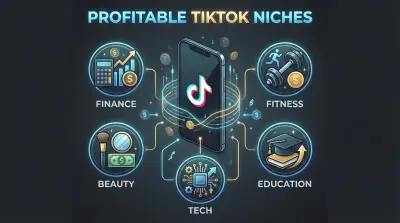
Best TikTok Niches That Actually Make Money in 2026
The most profitable TikTok niches ranked by real earning potential — with exact monetization paths, follower benchmarks, and what to avoid.
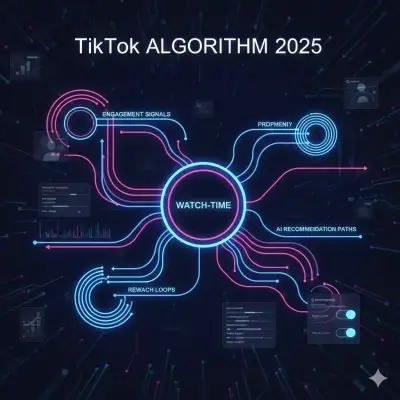
How the TikTok Algorithm Actually Works in 2026 (Proven Tactics)
Learn how the TikTok algorithm works in 2026 and the actionable tactics creators use to increase reach, engagement, and followers fast.