
Why Your TikTok Views Dropped Overnight (2026 Diagnosis Guide)
Updated: June 2026
You were averaging 20,000 views a day. Then nothing. The next five videos barely crossed 200. Your first instinct is probably that you got shadowbanned.
You almost certainly didn't. In the vast majority of cases, the account isn't banned or suppressed. The algorithm stopped distributing your content because a metric you weren't tracking shifted underneath you. Before you delete anything or abandon the account, here's how to figure out what actually happened.
Reason 1: The Algorithmic Cohort Shift
TikTok doesn't score each video in isolation. It tracks your account's trust level in rolling 30 to 60-day cycles. When you have a strong month, TikTok tests your content on progressively larger audience segments, pushing it further from your core followers.
Eventually your videos reach a segment with no interest in your niche. That audience swipes away immediately. TikTok registers a collapse in average watch time and, because retention is the metric it weights most heavily, it concludes your content has gotten worse. If this happens across three videos in a row, the algorithm resets your account to its lowest distribution tier, what most creators call "200-view jail."
The fix is to stop trying to chase the broad audience that just rejected you. Go back to your most specific sub-niche. Make content that your core followers will watch through to the end. That's how you rebuild the trust score that got you pushed in the first place.
For more on how TikTok's distribution tiers work, see how the TikTok algorithm actually decides who sees your content.
Reason 2: Format Drift
When a video goes viral, most creators try to recreate it without understanding what specifically made it work. The format shifts gradually, and the performance follows.
Ask yourself a few honest questions about your recent videos compared to your best performers. Did your hooks get longer? Viral videos often have two or three scene cuts in the first two seconds. If your recent videos have you talking to camera for five seconds before getting to the point, that's the difference. Did you lose the visual anchor? Strong-performing videos frequently have bold text on screen from the first second. Did the energy flatten? The urgency that comes naturally when you're new tends to fade by video 100, and the audience notices before you do.
Pull up your last five viral videos and your last five dead ones. Watch them back to back with the volume off. The structural differences become obvious very quickly.
Reason 3: The Niche Pivot Penalty
TikTok's categorization system is unforgiving about consistency. Once your account gets labeled, say, a fitness page, and you start posting about cryptocurrency, the algorithm doesn't know which audience to test your new content on. So it tests the crypto videos on your existing fitness followers. They skip immediately. TikTok reads that as a failed video and suppresses distribution.
The problem compounds because you trained the algorithm to find a specific type of viewer, and then you fed those viewers something they don't want. The penalty isn't permanent, but recovery takes longer than most creators expect. You need at least two weeks of on-niche content before distribution starts recovering.
How to Identify a Real Shadowban
A genuine shadowban is less common than the creator internet would have you believe, but it does happen. It occurs when an account trips a safety filter for something not severe enough to ban outright but concerning enough that TikTok restricts its reach to protect advertiser relationships.
The Diagnostic Test
Open Analytics and look at the Traffic Sources breakdown for your last three videos. If For You Page traffic is sitting at exactly 0%, or below 1%, and your views are coming almost entirely from your profile or followers, your account is restricted. If FYP traffic is 15% or higher, you are not shadowbanned. Your content is simply failing the retention test.
If you do confirm a genuine restriction, common triggers include using copyrighted audio for commercial-style promotion, content that depicts risky physical activities, or third-party tools that strip watermarks and corrupt the video metadata in the process. The only way out is clean, policy-compliant content posted consistently for 14 days until the restriction lifts.
The 7-Day View Recovery Protocol
If you've confirmed you're not shadowbanned, the following sequence is the fastest way to rebuild your account's standing with the algorithm. Treat your account as if it has zero followers and zero history.
| Day | Action | Why It Works |
|---|---|---|
| Days 1-2 | Stop posting. Compare your last 5 viral videos to your last 5 dead ones. Write down every structural difference you find. | Stops the negative momentum. Prevents you from panic-posting another video that tanks your average. |
| Day 3 | Post one genuinely controversial question in your niche. Nothing inflammatory, just something your audience will argue about in the comments. | Forces comment engagement fast, which acts as a signal reset for dead engagement rates. |
| Days 4-5 | Post a short listicle: "Top 3 tools for X" or "3 mistakes people make with Y." Keep it under 15 seconds. | Short videos with clear structure have high completion rates and loop ratios, which directly rebuilds your average watch time. |
| Days 6-7 | Don't record a new concept. Use TikTok's "Reply with Video" feature to respond to the strongest comment from Day 3. | Uses existing community momentum and proves to the algorithm that your account generates ongoing discussion. |
What to Ignore During Recovery
Looking at the wrong metrics during a recovery will lead you to bad decisions.
Total likes don't matter here. They are not a distribution signal in 2026 and haven't been for a while. Ignore them completely.
Initial view counts in the first hour also don't tell you anything useful right now. When your account trust is low, TikTok delays the push. A video might sit at 50 views for two days before climbing to 10,000 on day three. Judging a recovering video by its first-hour number is how creators delete things they should have kept.
Watch average watch time only. If people are watching your videos through, TikTok will push them. Everything else is noise during a recovery phase.
For a broader look at what actually drives sustainable TikTok growth, see why most TikTok creators fail to grow past 10,000 followers.
Frequently Asked Questions
- Should I delete TikTok videos that only got 100 views?
- No. Deleting multiple videos in a short window signals unstable account behavior to TikTok's spam detection systems. Leave underperforming videos alone. TikTok's search index often picks them up weeks or months later, and a video that flopped on the FYP can quietly accumulate thousands of views through search traffic over the following six months.
- Does taking a month off TikTok hurt your views when you come back?
- Yes, significantly. If you go quiet for 30 days, the audience segment TikTok assigned to your account moves on to other creators in your niche. When you return, the algorithm treats your account similarly to a new one with no momentum. You will need to go through the testing phase again from scratch, which typically takes two to four weeks of consistent posting before distribution recovers.
- How long does it take to recover from a TikTok view drop?
- Most accounts that follow a structured recovery protocol see meaningful improvement within 7 to 14 days. Accounts that have also triggered a genuine safety restriction can take up to 30 days. The biggest mistake during recovery is posting inconsistently or panic-deleting videos, both of which extend the timeline considerably. Consistency matters more than quality during this window.
- Why do some videos get stuck at exactly 200 views on TikTok?
- 200 views is TikTok's minimum test distribution: the first small batch of users the algorithm shows a new video to before deciding whether to push it further. If watch time is low in that initial group, the video doesn't move past that number. It's not a bug or a penalty. It's the first filter, and it means the hook or format didn't retain that test audience long enough to earn a wider push.
Related Articles
Explore the TikTok Growth hub →
How the TikTok Algorithm Actually Works in 2026 (Proven Tactics)
Learn how the TikTok algorithm works in 2026 and the actionable tactics creators use to increase reach, engagement, and followers fast.
Why Most TikTok Creators Fail in 2026 (And What To Do)
Most TikTok creators quit within 90 days. This guide breaks down the 8 real reasons creators fail and the specific changes that fix each one.
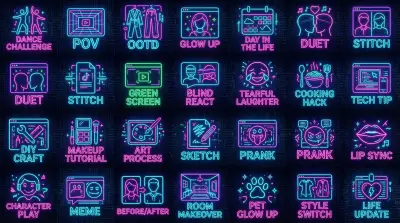
25 TikTok Video Ideas That Go Viral in 2026 (With Scripts)
Stop staring at a blank screen. Here are 25 proven TikTok video formats with hooks, scripts, and editing notes that actually drive views.