
How the TikTok Algorithm Actually Works in 2025 (Proven Tactics)
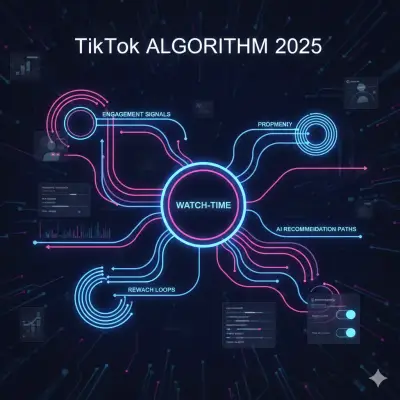
How the TikTok Algorithm Actually Works in 2025
Every creator has the same question: why did that video flop when the last one went viral? The answer is almost always the algorithm — specifically, the ranking signals it uses to decide which videos deserve wider distribution. If you understand these signals, you can stop guessing and start making deliberate decisions about your content.
This guide explains exactly what the TikTok algorithm measures in 2025, which signals matter most, and the specific tactics you can use to work with the system instead of against it.
How the algorithm decides what to show
TikTok's For You page is powered by a recommendation engine that evaluates every video through a multi-stage process. Here is how it works in simplified terms:
Stage 1: Small test pool
When you publish a video, TikTok shows it to a small group of users — typically a few hundred people. This initial group is selected based on your follower base, your content history, and the hashtags and keywords in your caption. This is your video's first exam.
Stage 2: Performance evaluation
TikTok measures how that small group reacts. The key question: did they watch, engage, and come back for more? If the metrics from this small group are strong, TikTok expands the audience to a larger pool — maybe a few thousand people. If metrics are weak, distribution stops.
Stage 3: Scaling
Videos that pass each round of testing continue to be shown to progressively larger audiences. A video that performs well with 500 viewers gets shown to 5,000, then 50,000, then potentially millions. Each round is a new test with a new audience. The video has to keep performing at every level to keep growing.
This is why you sometimes see a video take off 24 to 48 hours after posting — it is still passing through testing rounds.
The 7 ranking signals TikTok measures
Not all engagement is weighted equally. Here are the signals ranked by their impact on whether your video gets pushed to larger audiences:
1. Watch time and completion rate (highest impact)
This is the single most important metric. TikTok tracks what percentage of viewers watch your entire video and how long the average viewer stays. A 15-second video where 80% of viewers watch to the end will outperform a 60-second video where most viewers leave at the 10-second mark.
Practical implications:
- Shorter is not always better, but every second must earn the next second of attention
- Cut anything that does not directly serve the video's promise
- Your hook determines whether anyone stays past second 2 — make it count
2. Rewatch rate
When someone watches your video more than once, it is one of the strongest quality signals TikTok can receive. It means the content was interesting enough to revisit — whether to catch a detail they missed, appreciate the humor again, or follow along with a tutorial.
How to increase rewatches:
- Loop your ending into your beginning (seamless loop transitions)
- Flash quick text at the end that viewers need to replay to read
- Hide a small detail or pattern that only makes sense on second viewing
- For tutorials: move through steps fast enough that viewers replay to follow along
3. Early engagement velocity
How quickly your video accumulates likes, comments, shares, and saves in the first 30 to 60 minutes matters significantly. Fast early engagement tells TikTok that the content is resonating immediately, which justifies expanding distribution quickly.
This is why posting time matters — you want to publish when your audience is most active so those first-hour metrics are as strong as possible. Check your TikTok Analytics under "Followers" to find your best posting windows.
4. Saves and shares
Saves and shares are weighted more heavily than likes because they require more intent. A like is a single tap — often reflexive. A save means "I want this content to exist in my collection." A share means "someone specific needs to see this." Both signal high content value.
Content that earns saves: checklists, tutorials, templates, reference guides, recipes — anything viewers want to come back to later.
Content that earns shares: relatable moments, shocking facts, helpful tips targeted at a specific group, content that sparks debate.
5. Click-through rate from thumbnails
TikTok shows your video as a thumbnail in search results, on your profile grid, and in some sections of the app. The percentage of people who tap on that thumbnail to watch determines your CTR. Higher CTR means more views from the same number of impressions.
How to improve thumbnail CTR:
- Use bold, readable text overlay on your first frame — this becomes your thumbnail
- Include one clear promise ("3 hooks that work")
- Use high contrast colors so the thumbnail stands out in a grid of other videos
- Avoid cluttered frames with too many elements competing for attention
6. Content relevance and topical freshness
TikTok's AI analyzes your video's spoken words (via automatic captions), on-screen text, visual elements, hashtags, and caption text to understand what your video is about. It then matches your content to users who have previously engaged with similar topics.
This is essentially TikTok SEO — making sure the algorithm correctly understands your content so it can find the right audience. If TikTok misidentifies your video's topic, it will show it to the wrong people, watch time will drop, and the video will die.
Be explicit about your topic: say your keyword early, put it on screen, include it in your caption. Do not make the algorithm guess.
7. Account authority
Accounts that consistently post content with strong metrics build what could be called "algorithmic trust." TikTok starts testing your new videos with slightly larger initial audiences because your track record suggests the content will perform well.
This is why consistency matters more than virality. One viral video followed by silence does less for your account than a steady stream of videos with above-average watch time. Building authority is a long game, but it compounds — each good video makes the next one a little easier to distribute.
6 tactics to work with the algorithm
Tactic 1: Cut every video to a single promise
The most common reason videos underperform is that they try to cover too much. One video, one promise, one payoff. Structure it like this:
- Hook (0-3 seconds): State the outcome or show a surprising visual
- Body (3-40 seconds): Deliver on the promise directly — no filler, no tangents
- CTA (final 2-3 seconds): Ask for one specific engagement action (save, share, or comment)
Tactic 2: Optimize your first frame for the scroll
Your first frame is the most important frame. It decides whether someone stops scrolling or keeps going. Use these techniques:
- Start mid-action (avoid blank screens or logo intros)
- Put text on screen immediately
- Use facial expressions that convey emotion — surprise, urgency, excitement
- Show a result or transformation that makes people curious about the process
Tactic 3: Prime for early engagement
Post when your audience is most active. Then stay online for the first 30 minutes after posting to reply to every comment. Pin a question as your first comment to seed the conversation. These actions boost your early engagement velocity — one of the algorithm's key signals.
Tactic 4: Scale your winners
When a video performs significantly better than your average, do not just celebrate — study it. What was the topic? What was the hook? How long was it? What sound did you use? Then create 3 to 5 follow-up videos that use the same patterns with slight variations.
Successful creators do not constantly try new ideas. They find what works and iterate on it relentlessly until it stops working.
Tactic 5: Cross-promote to feed real users back
Sharing your TikTok content on Instagram Reels, YouTube Shorts, and other platforms brings real users (not bots) back to your TikTok profile. When TikTok sees external traffic arriving on a video, it interprets this as a quality signal that can boost distribution.
Tactic 6: Use the algorithm's testing behavior to your advantage
Since TikTok tests your video in stages, you can A/B test hooks by posting the same core content with different openings on different days. Keep the body and CTA the same but swap the first 3 seconds. The version with higher completion rate tells you which hook style resonates with your audience.
Over time, this builds a personal database of what works for your specific niche and audience — more valuable than any generic growth advice.
A 4-week experiment to double your discoverability
If you want to put this knowledge into practice, follow this structured experiment:
Week 1: Hook optimization
For every video you post, record 3 different hook openings before choosing one. Compare completion rates at the end of the week. Identify which hook style performs best for your niche.
Week 2: Series launch
Take your best-performing topic from Week 1 and turn it into a 3-part series. Number the parts clearly. Pin Part 1 to your profile. This trains followers to come back for new installments.
Week 3: Engagement engineering
Pin a strategic question comment on every video. Reply to every comment within 60 minutes of posting. Use "Reply with Video" for at least one comment per day. Track how comment count changes compared to weeks 1 and 2.
Week 4: Scaling winners
Review your analytics from weeks 1 to 3. Identify your top 3 performers by watch time. Create 5 new videos that follow the same topic, hook style, and format. Post them with optimized posting times from your analytics data.
By the end of this experiment, you will have concrete data about what works for your specific account — not general advice, but personalized insights.
Quick practice plan
If you only change one thing this week, change your first three seconds. Write 10 hooks, record 10 openings, and test them against the same topic.
- Today: Pick one topic and film 3 different hooks.
- Tomorrow: Post the best hook and watch the first 2 seconds retention in your analytics.
- This week: Turn the winner into a 3-part series.
FAQ
Does TikTok still push new accounts?
New accounts can receive a small initial boost where TikTok tests their early videos with slightly wider audiences. But this is not a guaranteed "new account advantage" — it is simply TikTok trying to learn what kind of content your account produces. Strong watch time in those first videos is what determines whether the algorithm continues pushing your content.
What matters more: likes or watch time?
Watch time is consistently the stronger signal. Likes help and they count, but high watch time with low likes will outperform low watch time with high likes. Focus on making people stay, and the engagement will follow naturally.
Can I beat the algorithm with posting frequency alone?
No. Posting 5 low-quality videos per day will not outperform posting 1 strong video per day. Frequency helps when quality is consistent, but quality always comes first. The algorithm evaluates each video individually — your bad videos do not get a free pass because you also posted a good one.
Does the algorithm penalize deleting videos?
There is no confirmed penalty for deleting videos. However, leaving low-performing videos on your profile is generally harmless and can sometimes pick up views later. Delete only if the content is incorrect or could harm your brand — not just because the view count was low.
For more on optimizing your content for TikTok's search features, read our TikTok SEO guide. For avoiding common pitfalls, check 7 mistakes killing your TikTok engagement.
Related Articles
Explore the Guides hub →
How the TikTok Algorithm Actually Works in 2026 (Proven Tactics)
Learn how the TikTok algorithm works in 2026 and the actionable tactics creators use to increase reach, engagement, and followers fast.
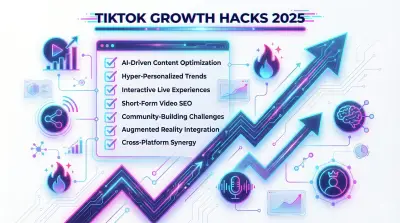
10 High-Impact TikTok Growth Hacks for 2025 (That Actually Work)
Practical, tested TikTok growth hacks for 2025 — techniques creators use to get more views, followers and engagement without ads.

How to Grow on TikTok From 0 to 100k Followers (The 2025 Blueprint)
A complete, tactical blueprint to grow from 0 to 100,000 followers on TikTok using algorithmic signaling, content formats, and audience psychology.