
Low Dopamine Morning Routine for Peak Focus
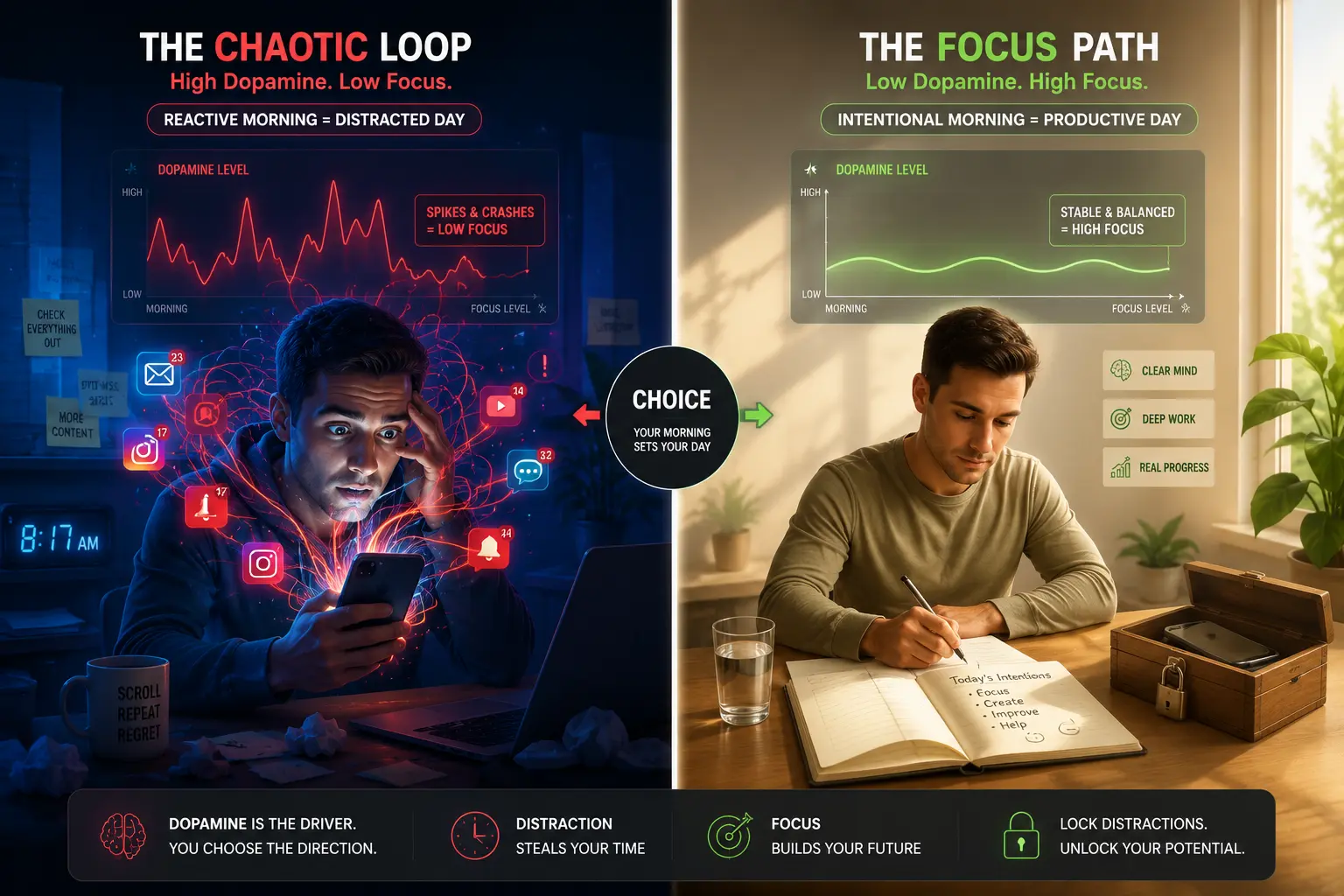
You wake up, reach for your phone before your eyes have fully adjusted to the light, and open Instagram. Eleven minutes later you put the phone down and your brain feels scattered, like you've already lost a race you didn't agree to run. That's not tiredness. That's a dopamine spike at 7am crashing your baseline before you've had a single original thought of the day.
Here's what's actually happening. Your brain's dopamine system works on contrast. A scroll through short-form video delivers dozens of small, unpredictable rewards in rapid succession, the kind of stimulation your prefrontal cortex (the part responsible for sustained attention and decision-making) didn't evolve to follow calmly into a spreadsheet or a line of code. Once you've primed your reward system with that kind of input, anything slower feels unbearably boring by comparison. Deep work doesn't just become harder. It becomes physically uncomfortable.
This guide gives you the actual mechanism behind that crash, a step-by-step morning protocol built around it, and the troubleshooting you'll need for the first week when your brain fights back. No vague advice to "be more mindful." Just what to do when you wake up tomorrow.
The Science Behind a Low Dopamine Morning Routine
The core idea isn't about avoiding dopamine. It's about controlling when and how it spikes, so your focus window in the morning stays usable instead of getting torched before 8am.
How Early Morning Screen Time Overstimulates Your Brain
Short-form content, group chat notifications, and the algorithmic feed of any social app are engineered to deliver variable, unpredictable rewards, which is the exact pattern that produces the strongest dopamine response in the brain. It's the same mechanism behind slot machines. First thing in the morning, your brain hasn't built up any resistance to that kind of stimulus yet, so the spike hits harder than it would at 3pm after a full day of normal activity.
The problem isn't the dopamine itself. It's the speed and size of the spike relative to everything that follows it. After a fast scroll session, a task like writing an email or reading documentation produces so little stimulation by comparison that your brain registers it as aversive. You're not lazy or unfocused. You've just recalibrated your reward system to expect a much higher baseline than slow, effortful work can provide.
The Baseline Dopamine Concept: Why Slower Mornings Equal Better Focus
Your dopamine system operates relative to a baseline, not in absolute terms. Spike it hard early and the baseline temporarily rises, which means everything below that new baseline (almost everything, since almost nothing matches a notification feed's stimulation density) feels flat and unrewarding by comparison.
Keep the morning low-stimulus instead, and your baseline stays low and stable. Against that lower baseline, normal tasks like reading, planning, or writing code register as engaging rather than tedious. This is the actual mechanism behind why people report feeling "in the zone" more easily on mornings when they didn't touch their phone. It's not willpower. It's baseline math.
Cortisol Awakening Response vs. Artificial Dopamine Spikes
Within the first 30 to 45 minutes of waking, your body naturally produces a spike in cortisol called the cortisol awakening response (CAR). This isn't the bad, chronic-stress version of cortisol people usually mean when they say "cortisol is bad." Acute morning cortisol is part of what makes you feel alert and ready to engage with the day, and it works in tandem with your dopamine system to set your attention capacity for the next several hours.
Stack a phone-driven dopamine spike directly on top of the CAR window and the two systems interfere with each other. Cortisol primes you for engagement, dopamine from your phone redirects that engagement toward stimulation-seeking instead of toward your actual priorities. Let the CAR run its course without artificial dopamine competing for the same window, and that natural alertness channels into whatever you turn your attention to first, which is exactly why protecting the first 30 to 45 minutes matters more than any other part of the routine.
Step-by-Step Low Dopamine Morning Routine Protocol
This is the order that matters. Each step sets up the one after it.
The First 30 Minutes: Implementing a Strict Tech Blackout
No phone, no laptop, no TV for the first 30 minutes after you wake up, full stop. Charge your phone outside the bedroom overnight if you genuinely can't trust yourself not to check it the second your alarm goes off; that single environmental change removes more friction than any amount of self-discipline.
If you use your phone as an alarm, switch to a basic clock for this period. The habit of reaching for the device the moment it makes noise is the exact trigger you're trying to break, and an alarm clock costs less than ten dollars.
Hydration and Delayed Caffeine Intake for Sustained Energy
Drink 500ml of water within the first ten minutes of waking, before anything else. You've gone six to eight hours without fluids and mild dehydration alone produces a foggy, low-focus feeling that gets misattributed to "needing caffeine" when it's actually just needing water.
Delay caffeine by 60 to 90 minutes after waking. This isn't about avoiding caffeine, it's about timing it after your natural cortisol spike has already peaked and started to decline, so the caffeine extends your alertness window instead of overlapping with and partially wasting the cortisol you're already getting for free. Drinking coffee the second you wake up means you're paying for alertness your body was about to give you anyway.
Natural Light Exposure to Reset Your Circadian Rhythm
Get outside, or at minimum sit by a window with direct light, for 10 minutes within the first hour of waking. Light exposure this early sets your circadian rhythm for the day and improves alertness through a pathway separate from both cortisol and dopamine, via your eyes' direct connection to your brain's master clock.
This step alone, done consistently, improves sleep quality that night, which compounds into better focus the following morning. It's the cheapest, most underrated step in the entire protocol and most people skip it because it doesn't feel like it's "doing" anything.
If you're a creator whose job actually involves the apps you're avoiding in the morning, the discipline carries over: the same low-stimulus mindset that protects your focus window is what separates a sustainable content schedule from burnout, which is part of why picking sustainable best TikTok niches matters as much as posting frequency.
Low-Stimulus Brain Engagement: Reading or Mind-Dumping
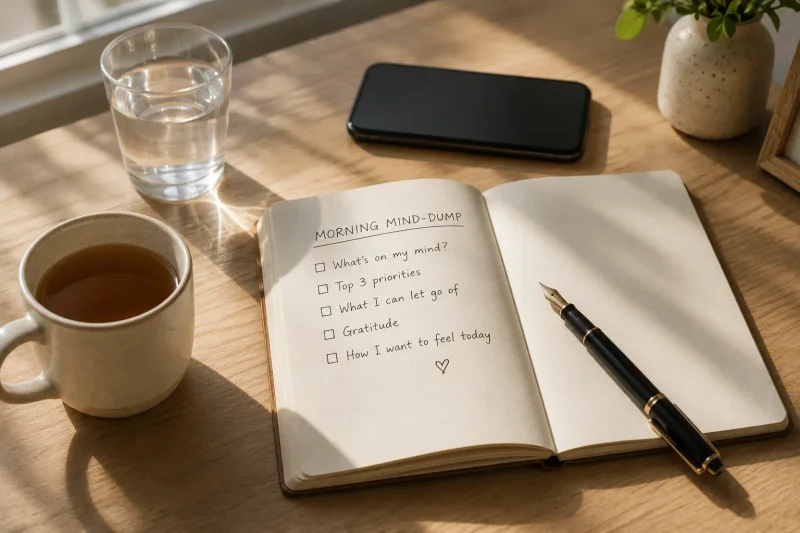
Once the first 30 minutes have passed, ease into low-stimulus mental engagement rather than jumping straight into demanding work. Read a physical book, or spend five minutes writing whatever's in your head onto paper without editing it. Both options give your brain something to engage with that doesn't carry the variable-reward structure of a screen, which keeps your baseline low while still letting you wake up mentally.
Mind-dumping specifically clears the mental clutter of half-formed worries and to-do items that would otherwise surface mid-task later and break your concentration. Five minutes here often saves twenty minutes of distracted refocusing during actual work later in the day.
Designing a Low-Stimulus Workspace for Freelancers and Students
The routine falls apart fast if the environment you walk into after it is just as overstimulating as the phone you avoided.
Removing Digital Friction: Setting Up Focus Modes on Devices
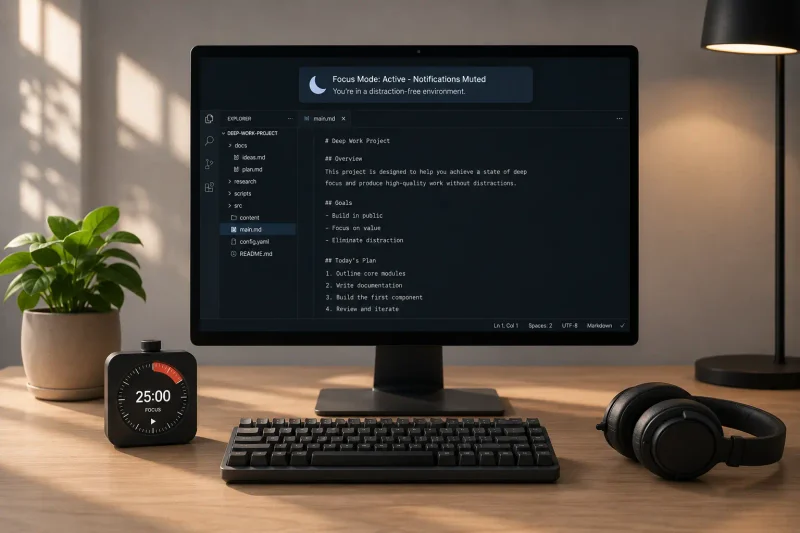
Set up a dedicated focus mode on your phone and laptop that blocks notifications from everything except genuinely urgent contacts, and schedule it to activate automatically every morning rather than relying on you remembering to turn it on. The goal is removing the decision entirely, since any decision you have to make repeatedly is a decision you'll eventually skip on a tired day.
Move social and messaging apps off your home screen and into a folder on a secondary screen. This adds maybe two extra taps to open them, which sounds trivial, but that small added friction measurably reduces how often you open them out of pure habit rather than genuine need.
Visual Minimalism: Clearing Physical Clutter for Cognitive Calm
A cluttered desk competes for the same limited visual attention your focused work needs. Clear your workspace down to what you're using for the current task, nothing decorative or "for later" sitting in your peripheral vision. This isn't aesthetic preference, it's reducing the number of competing visual stimuli your brain has to actively filter out before it can settle into one task.
This matters more for remote workers and students than office workers, since a home desk often doubles as storage for unrelated life clutter that an actual office desk wouldn't have.
The Power of Asynchronous Communication at the Start of the Day
Don't open Slack, email, or any messaging platform until you've completed your single most important task for the day, covered in the next section. Responding to messages first thing means you're starting your day reactively, letting other people's priorities set your attention agenda before you've set your own.
This is genuinely hard for freelancers managing client expectations, but most clients don't actually expect a response within the first hour of your workday regardless of what anxiety tells you. Check your own assumption against your actual response history before assuming you need to be instantly available. The same patience pays off in content work too: a TikTok SEO guide will tell you discoverability is a long game, not a same-hour panic, and your inbox deserves the same expectation.
Transitioning from Low Stimulation to Deep Work Focus
This is the bridge between the calm morning and the actual output your day depends on.
Choosing the Day's Single Most Important Task
Pick exactly one task the night before, not the morning of, since morning decision-making about priorities burns the same limited mental energy you need for the task itself. Write it down somewhere you'll see it immediately, like a sticky note on your laptop or the first line of your mind-dump notebook.
One task, not three. A list of three "most important" tasks just becomes a list you triage in the morning, which reintroduces the exact decision fatigue this whole protocol is built to avoid.
The 5-Minute Friction Rule for Overcoming Analytical Paralysis
Commit to working on the chosen task for five minutes before allowing yourself to judge whether you feel like continuing. Most resistance to starting deep work isn't about the task itself, it's about the anticipated effort of starting, which your brain consistently overestimates. Five minutes in, the actual task is usually less unpleasant than the anticipation was, and momentum from those five minutes carries you well past the point where you'd have talked yourself out of starting at all.
This works specifically because it bypasses the decision "should I do this," which is where procrastination actually lives, and replaces it with a much smaller decision: "can I do this for five minutes." Almost always yes.
Low-Dopamine Audio Options: Ambient Noise vs. Lofi Beats
If you work with background audio, ambient noise (rain, brown noise, café ambience) keeps stimulation lower than music with vocals or a strong beat, since unpredictable melodic changes pull a small amount of attention away from your task every time the pattern shifts. Lofi beats sit in the middle: more stimulating than pure ambient noise, less disruptive than anything with lyrics.
Test both during actual work sessions rather than assuming one is universally better. Some people focus better with a small amount of rhythmic stimulation in the background; others find any music at all competes with verbal or analytical tasks specifically. Notice which one you reach for during a genuinely good focus session versus a distracted one, and let that data decide for you going forward.
Healthy Low-Dopamine Breakfast Options for Brain Health
What you eat in the first hour affects the same neurotransmitter systems this entire routine is managing.
Protein-Rich Meals to Support Neurotransmitter Synthesis
Dopamine itself is synthesized from the amino acid tyrosine, which your body gets from protein. Eggs, Greek yogurt, paneer, or a protein shake all supply the raw material your brain needs to maintain stable dopamine production through the day, rather than spiking and crashing it the way sugar does.
This doesn't mean breakfast needs to be elaborate. A simple protein source eaten within an hour of waking does more for sustained focus than most "brain food" supplements marketed for the same purpose.
Avoiding High-Sugar Breakfast Foods That Cause Afternoon Crashes
A high-sugar breakfast (sweetened cereal, pastries, sugary tea or coffee) produces its own rapid dopamine and blood sugar spike, followed by a crash roughly two to three hours later that lands right in the middle of your most useful work hours. This is the same overstimulation problem as a phone scroll, just delivered through food instead of a screen.
Swapping a sugary breakfast for a protein and fiber-based one doesn't just stabilize energy, it removes one more spike-and-crash cycle competing with the calm baseline you're trying to maintain all morning.
Practical Fast Meal Prep for Busy Creators and Remote Workers
Boiled eggs prepped the night before, overnight oats with a scoop of protein powder, or paneer paratha if you've got five extra minutes all work without adding decision fatigue to an already deliberately low-decision morning. Pick one option and repeat it most days rather than deciding what to eat every single morning, which is itself a small dopamine-driven decision you can eliminate entirely.
Troubleshooting Common Hurdles in the First Week
The first week is where most people quit, almost always for the same three reasons.
Overcoming FOMO and Phantom Vibrations
You will feel a pull to check your phone that has nothing to do with an actual notification, sometimes including phantom vibrations where you're certain it buzzed and it didn't. This is withdrawal from a stimulation pattern your brain has gotten used to, not a sign that something's actually wrong or that you're missing something urgent.
The pull fades within four to seven days for most people. Knowing that in advance makes it easier to sit through, since the alternative (assuming something's wrong with you specifically) makes people quit on day two when the urge is at its strongest.
Managing Morning Work Emergencies Without Breaking the Routine
A real emergency, an actual production outage or a client crisis, justifies breaking the routine. The trick is being honest with yourself about what counts. Most "urgent" morning messages can wait the 30 to 90 minutes your routine takes, and treating every notification as a potential emergency is exactly the anxiety pattern this routine is designed to dismantle.
If your job genuinely requires monitoring something time-critical first thing, set up a specific alert for that one thing only, separate from your general notifications, and keep everything else blocked.
Adapting the Routine for Night Owls and Irregular Sleep Schedules
The principles hold regardless of when you wake up. If your day starts at 11am because of a late work schedule, the tech blackout, hydration, and light exposure still apply relative to your wake time, not to the clock. Natural light exposure matters even more for late risers, since you're getting less total daylight exposure across your day already.
Freelancers with genuinely irregular schedules should anchor the routine to "the first 30 minutes after waking" as a fixed rule rather than a fixed clock time, since that's the variable that actually matters for the dopamine and cortisol mechanisms involved.
- What exactly is a low dopamine morning routine?
- It's a structured set of habits for the first hour after waking that avoids high-stimulation inputs like phones, social media, and sugar, in order to keep your dopamine baseline low and stable. A stable baseline makes normal, effortful tasks like deep work feel engaging rather than boring by comparison, which is the actual mechanism behind better focus later in the day.
- How long should I delay my first phone check in the morning?
- Aim for a minimum of 30 minutes, with 60 to 90 minutes being noticeably more effective for most people. The first 30 to 45 minutes overlaps with your cortisol awakening response, and avoiding artificial dopamine spikes during that window protects the natural alertness your body is already producing for free.
- Does a low dopamine routine mean I can't drink coffee or tea?
- No, it just means timing matters. Delaying caffeine by 60 to 90 minutes after waking lets your natural cortisol spike peak first, so the caffeine extends your alertness window instead of overlapping with and partially wasting cortisol you'd have gotten anyway.
- How many days does it take to reset your dopamine receptors?
- Most people notice the sharpest withdrawal-like pull toward old habits fade within four to seven days. Deeper changes to baseline sensitivity continue building over several weeks of consistency, so the first week mainly establishes the habit itself rather than completing the full physiological adjustment.
- Can I listen to music during a low dopamine morning?
- Ambient noise or instrumental lofi beats are generally fine and lower-stimulation than music with vocals or strong melodic shifts, which pull attention every time the pattern changes. If you're doing focused analytical or verbal work, test working in silence too, since some people find any music at all competes for the same attention resources.
Conclusion — Mastering Attention Management to Build a High-Output Digital Career
None of this works as a one-time experiment. The value compounds only if the first 30 to 90 minutes of your day stay protected consistently enough that your dopamine baseline actually resets, which takes more than one good morning to show up in how you feel during deep work. Treat the first week as data collection, not a test you pass or fail.
Tonight, before you sleep, do three things: move your phone charger outside the bedroom, set out a glass of water and a notebook where your phone usually sits, and write down tomorrow's single most important task on a sticky note where you'll see it before anything else. That's the entire setup. Tomorrow morning, the only thing left to do is follow through on what you already decided tonight, which is far easier than deciding anything fresh at 6am.
Related Articles
Explore the Growth & Learning hub →
Deep Work vs Shallow Work: How to Focus in a Distracted World
Most of your work hours are fake — here's how to reclaim the ones that actually produce output.
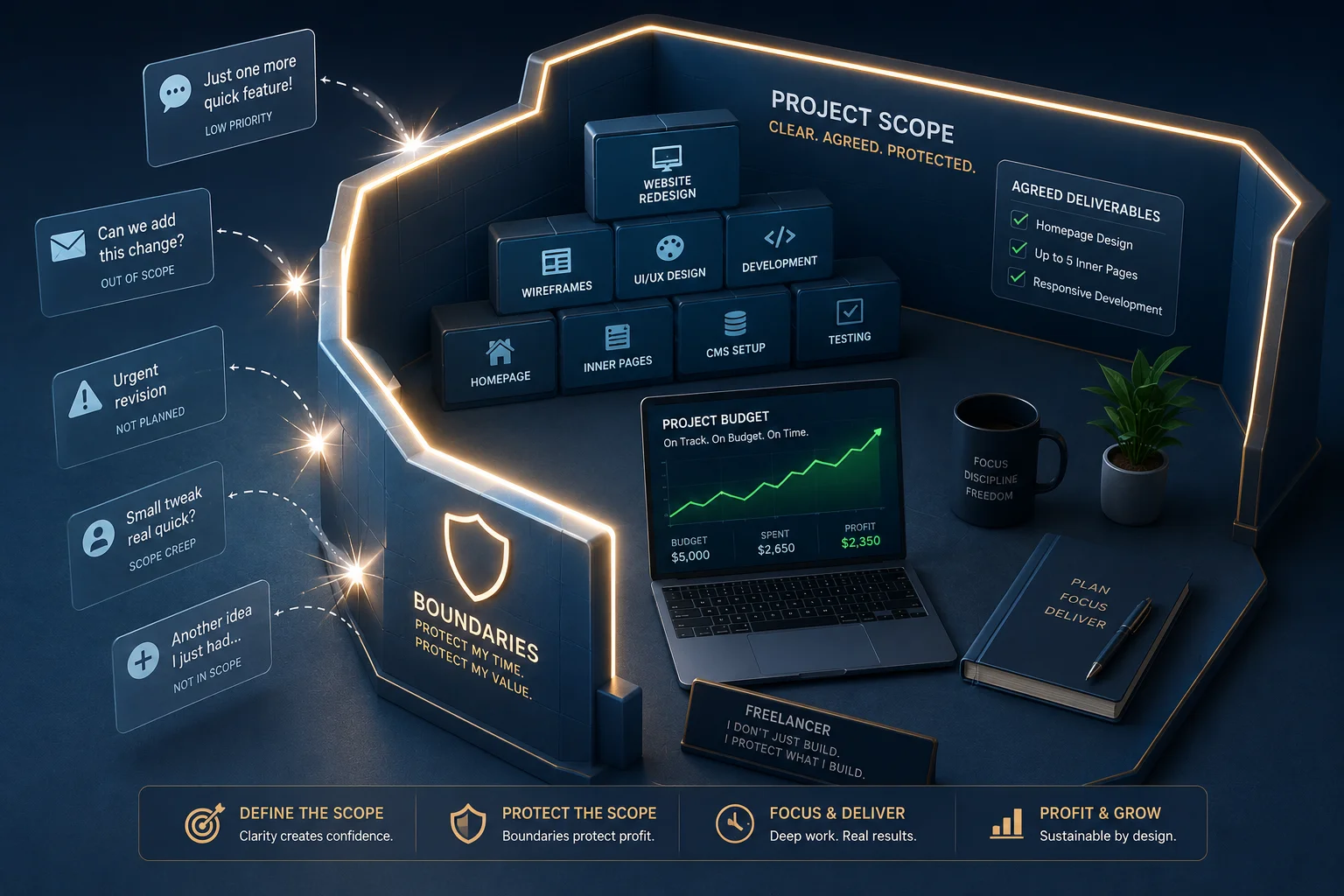
How to Say No to Scope Creep as a Freelancer
A two-week project becomes six weeks one 'quick request' at a time, and most freelancers never see it coming until the invoice doesn't cover the hours.
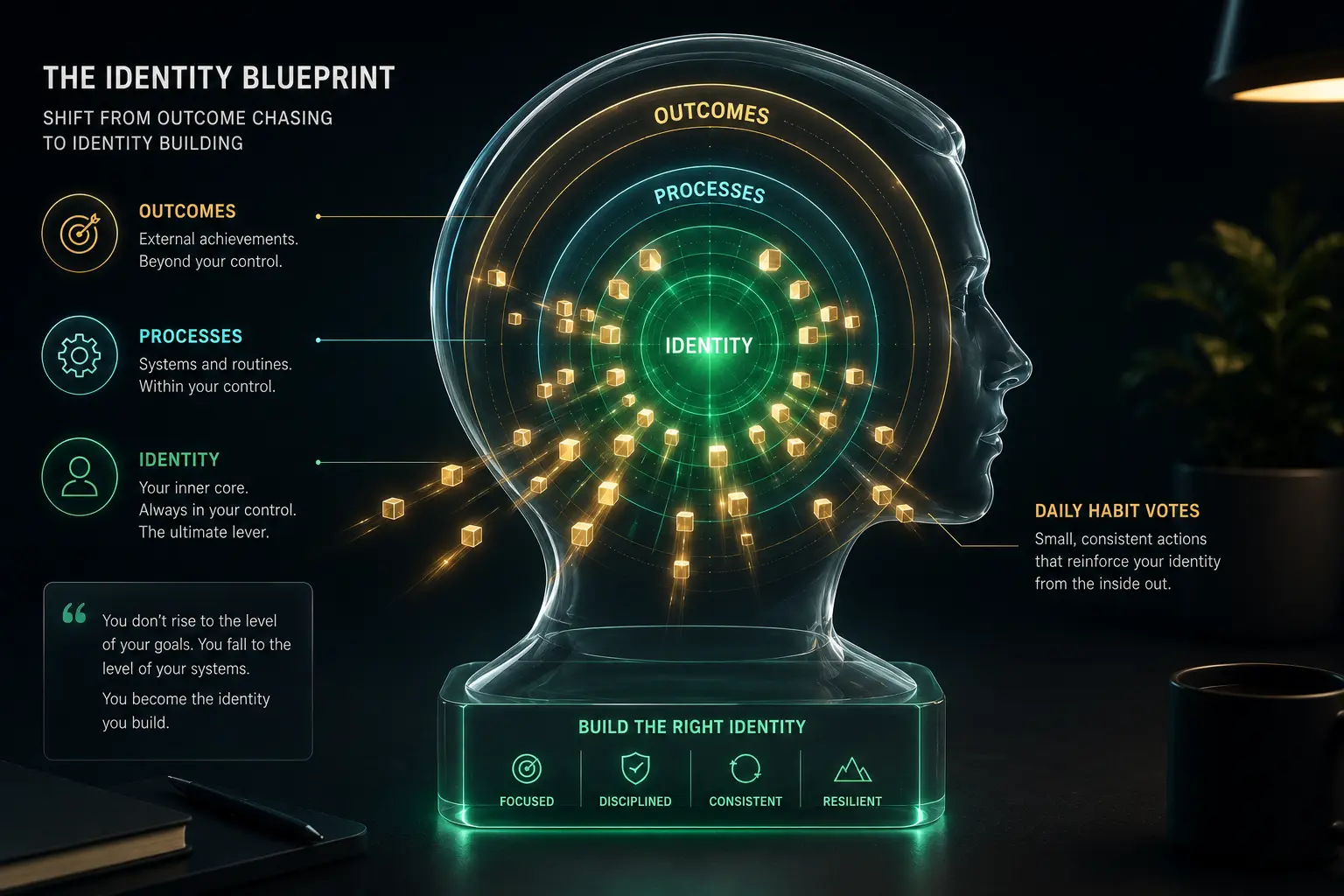
Identity-Based Habits vs Outcome Goals
Outcome goals tell you what you want — identity shifts tell you who you are — and only one of those actually changes behavior.