
Affiliate Marketing with Zero Audience: A Beginner Guide

Most affiliate marketing advice assumes you already have 10,000 followers on Instagram or a YouTube channel with a loyal comment section. That assumption is wrong, and it's the reason so many beginners quit before they publish a single piece of content. If you don't have an audience, you're not disqualified. You're just using the wrong playbook.
This guide proves that affiliate income doesn't come from personal influence. It comes from intercepting people who are already searching for a product, a comparison, or a solution to a problem, at the exact moment they're ready to click "buy." No following required. What's required instead is picking the right keywords, the right platforms, and the right products, then writing content that answers a question better than the ten other pages ranking for it.
What this guide delivers: a working strategy for cold-traffic affiliate marketing, a shortlist of platforms that hand you free organic traffic without a subscriber count, a method for picking products beginners can actually get approved for, a keyword research process that doesn't require expensive tools, and a content structure that converts strangers into buyers. It also tells you where this approach breaks down, because half of what's sold as "affiliate marketing training" leaves that part out.
The Core Strategy: How Affiliate Marketing Works Without a Following
Audience-Based vs. Intent-Based Marketing
Audience-based marketing sells to people who already trust you. A creator with 50,000 followers can post a link and get clicks because the relationship does the selling. Intent-based marketing skips the relationship entirely. It sells to people who typed a specific question into a search bar because they're already close to a purchase decision.
The two aren't equally accessible to a beginner. Building an audience takes months or years of consistent posting, and platforms actively suppress reach for accounts with no history. Intent-based marketing doesn't care about your history. A blog post published yesterday can outrank a channel with 100,000 subscribers if it answers the search query more precisely. This is the gap zero-audience marketers exploit: search engines and Q&A platforms rank content on relevance and usefulness, not on who's publishing it.
Leveraging Search Intent Over Personal Influence
Search intent is the reason behind a query. Someone typing "best budget mechanical keyboard under 50" isn't looking for entertainment or a personality to follow. They're two or three clicks away from a purchase and want someone to narrow the options for them. That's a fundamentally different, and easier, sale than convincing a cold Instagram follower to care about a product they weren't thinking about five seconds ago.
This is why niche, long-tail content consistently outperforms broad social posting for beginners. You're not creating demand. You're meeting demand that already exists and pointing it toward a specific product with a specific link.
The Anatomy of a Cold-Traffic Affiliate Sale
A cold-traffic sale usually follows four steps: the searcher types a specific, often price- or comparison-based query, they land on a page that answers it directly within the first two paragraphs, they scan a pros-and-cons breakdown or comparison table to confirm the recommendation matches their situation, then they click through to the retailer or product page while still in a buying mindset.
Every step that adds friction, a slow page, a vague headline, a review that buries the recommendation under 800 words of backstory, drops your conversion rate. Cold traffic has no loyalty to your site. If the page doesn't deliver fast, they hit back and click the next result.
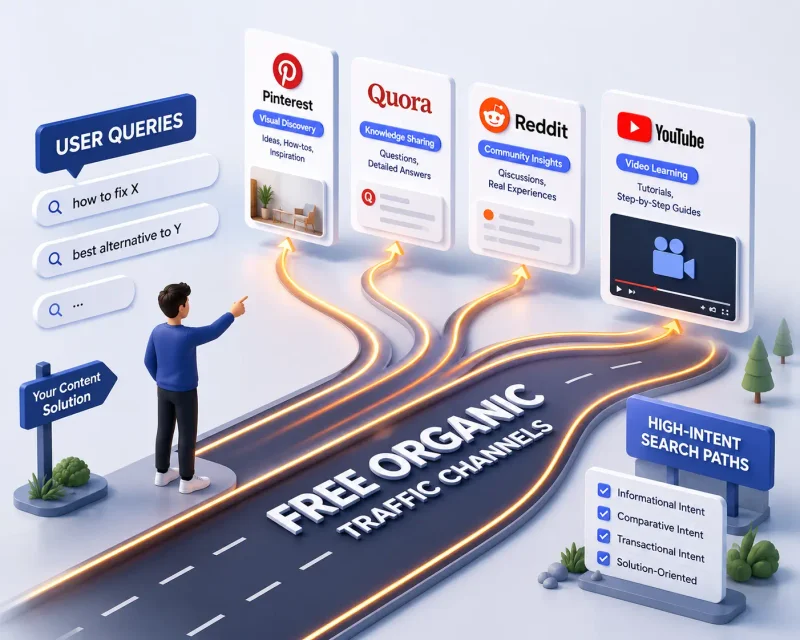
High-Intent Platforms That Provide Free Organic Traffic
Mastering SEO for Niche Blogs
A niche blog is still the strongest long-term asset for zero-audience affiliate marketing, because content compounds. A post ranking on page one keeps sending traffic for years without additional work, unlike a social post that dies after 48 hours. The tradeoff is time: expect three to six months before a new site sees meaningful organic traffic, even with solid SEO.
Start narrow. A blog trying to cover "tech gadgets" competes with Wirecutter and CNET. A blog covering "budget mechanical keyboards for small hands" or "standing desks for renters in small apartments" competes with almost nobody. Narrow niches have lower search volume per keyword, but they also have far less competition, which matters more when your site has zero authority to start with.
Using Pinterest as a Visual Search Engine
Pinterest behaves more like a search engine than a social network, and that distinction matters for affiliate marketers with no following. Pins from accounts with zero followers can and do rank in search results and get distributed through the Pinterest algorithm, because ranking is based on the pin's relevance and click-through performance, not the account's follower count.
Product roundup pins ("7 Desk Setups Under $200") and comparison pins perform particularly well because Pinterest users are frequently in a planning or shopping mindset already. Link the pin to your blog post rather than directly to the affiliate offer. Most affiliate networks and Pinterest's own policies restrict or complicate direct affiliate links in pins, and routing through your own content also lets you build an email list or retarget later.
Answering High-Value Questions on Quora and Reddit
Quora and Reddit both rank extremely well in Google search results, which means a well-written answer can get discovered long after you post it, not just in the minutes after publishing. Search "best budget X for Y" in Google for almost any product category, and a Reddit thread frequently appears in the top five results.
The approach here has to be careful. Reddit in particular has zero tolerance for obvious self-promotion, and moderators remove affiliate links and ban accounts that post them without an established history of genuine participation in that community. The workable version is answering the question thoroughly and honestly, mentioning your recommendation by name without a link, and only linking back to your blog (not the raw affiliate link) when the subreddit's rules explicitly allow it. On Quora, direct affiliate links are against the platform's terms, but linking to your own review is generally accepted if the answer itself is substantive.
Creating Faceless YouTube Review Videos
You don't need to appear on camera to use YouTube. Faceless review videos, screen recordings of a product, over-the-shoulder demos, voiceover comparisons of spec sheets, all rank in YouTube search and often in Google search results too, since Google frequently surfaces video results for product-comparison queries.
YouTube SEO works similarly to blog SEO: target specific, lower-competition search terms rather than broad ones. A video titled "iPhone 17 vs Galaxy S26 Camera Comparison" competes with major tech channels. "Best Budget Ring Light for Zoom Calls Under $30" does not. Link the affiliate offer in the description, and mention it briefly in the video itself, since YouTube's monetization and community guidelines require disclosure for paid or affiliate promotions.
How to Select High-Converting Affiliate Products for Beginners
Digital Products vs. Physical Products
Digital products, courses, software subscriptions, ebooks, typically pay commissions between 30% and 70%, sometimes higher, because there's no manufacturing or shipping cost eating into the margin. Physical products, sold mainly through Amazon Associates, pay far less, often between 1% and 10% depending on the category, because Amazon's margins are thin to begin with.
The catch with digital products is trust. A $500 course promoted by a brand-new blog with no track record converts far worse than the same course promoted by someone with a visible history in that niche. Physical products from recognizable brands convert more easily to cold traffic because the buyer already trusts Amazon or the manufacturer, not you. For a true zero-audience beginner, physical product reviews on Amazon Associates are usually the more realistic starting point, even with the lower commission rate, because the trust burden is lower.
Finding Low-Barrier, High-Commission Programs
Amazon Associates has one of the easiest applications to get approved for, but it has a hard requirement beginners often miss: you need at least three qualifying sales within your first 180 days, or your account gets closed and you have to reapply. That's a real deadline pressure for a brand-new site with no traffic yet, so don't apply the day you register your domain. Apply once you have several review posts published and some early traffic coming in.
ClickBank has one of the lowest approval barriers of any affiliate network, essentially instant, no site review, no minimum traffic. That accessibility comes with a tradeoff: the marketplace is full of low-quality digital info-products alongside legitimate ones, so vet anything you promote by actually checking the product, its refund rate (visible in ClickBank's marketplace stats), and independent reviews before attaching your name to it.
Digistore24 works similarly to ClickBank, easy approval, strong commissions on digital products, heavily used in fitness, self-improvement, and software niches, and it's popular with beginners for the same reason: low barrier to entry. The same caution applies. High commission rates on obscure digital products are sometimes a signal of weak product quality rather than a signal of opportunity.
Networks like ShareASale, Awin, and CJ Affiliate host reputable brand programs, but individual merchants inside these networks often reject applications from sites with no traffic history or thin content. Expect a lower approval rate here as a total beginner, and don't take rejection personally. Apply to specific merchant programs only after you have several published posts to show, since most applications ask for your site URL and review it before approving.
Evaluating Recurring Commission Models for Long-Term Income
Recurring commissions, paid monthly for as long as the referred customer stays subscribed, exist mainly in SaaS and subscription-based digital products: web hosting, email marketing tools, VPN services, online course platforms. A single sale that pays $20 a month for two years is worth far more than a one-time $40 Amazon commission, even though the upfront payout looks smaller.
The tradeoff is that SaaS and subscription products are harder to review convincingly without genuine hands-on use, and their affiliate programs often have longer cookie windows but stricter approval standards. This is a strong secondary strategy once you have a handful of physical-product reviews live and some traffic data to point to, not necessarily the first thing to chase.
Low-Competition Keyword Research for Absolute Beginners
Hunting for "Best [Product] Under [Price]" Keywords
Price-anchored keywords are some of the highest-converting, lowest-competition terms available to beginners, because they combine buying intent with a specific constraint that narrows the field of competing content. Take "best noise-cancelling headphones under 100" as a working example. This keyword signals a ready-to-buy searcher with a firm budget, and because it's more specific than "best noise-cancelling headphones," fewer large sites bother targeting it directly.
To build a post around this keyword: open with a one-sentence answer naming your top pick, follow with a comparison table of four to six products all under the $100 threshold, then give each product its own subsection with a pros-and-cons list and a direct affiliate link. Close with a short buying-guide section covering what actually matters at that price point (battery life, comfort, noise cancellation quality) so the post reads as genuinely useful, not just a wrapper around affiliate links.
Uncovering Long-Tail Comparison Keywords ("X vs Y")
Comparison keywords like "Notion vs Evernote" or "Fitbit Charge vs Apple Watch SE" capture searchers actively deciding between two specific options, which puts them close to a purchase. These keywords are easy to find without paid tools: type the first product name into Google, and the autocomplete suggestions will often surface the exact comparisons people are already searching for.
A good comparison post declares a winner (or a clear "it depends on X" answer) early, rather than sitting on the fence for 1,500 words. Fence-sitting content converts poorly because undecided readers don't click through to buy; they need a recommendation, not a longer list of considerations.
Identifying "Alternative to [Famous Software]" Gaps
"Alternative to Canva," "alternative to Grammarly," "alternative to Photoshop" keywords convert well because the searcher is often frustrated with the original product's price, features, or limits, and is actively looking to switch. These keywords also tend to have lower competition than the branded product's own name, since fewer sites specifically target the "alternative to" angle.
You can find these gaps by checking a product's own review pages and forums for complaints ("too expensive," "missing X feature") and then searching whether an "alternative to [product]" post already exists and ranks well. If the existing top results are thin, outdated, or don't actually compare real alternatives, that's your opening. Pairing this research with a rank tracking tool for bloggers on a budget makes it easier to see which of these gap keywords are realistically within reach for a new site.
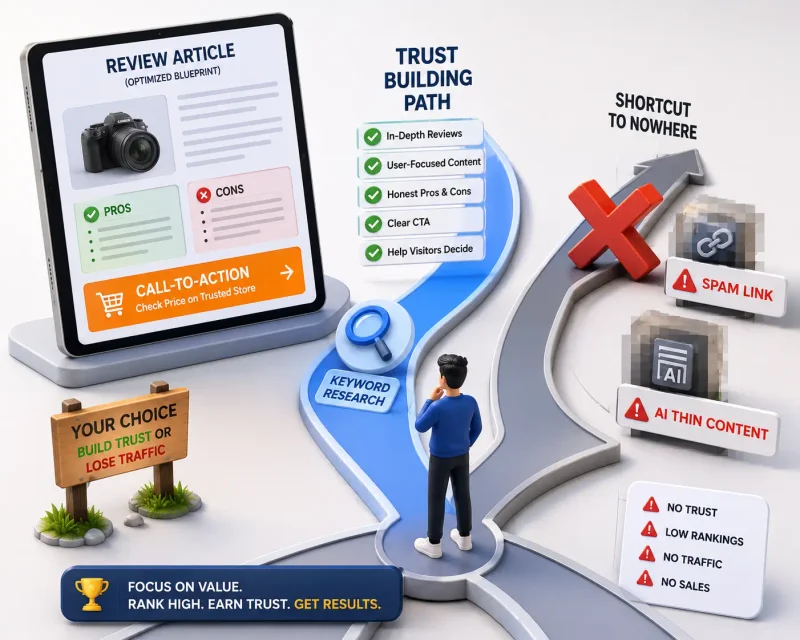
The Content Blueprint: Writing Affiliate Reviews That Actually Convert
The Skimmable Pros and Cons Breakdown
Almost nobody reads an affiliate review top to bottom before deciding. They scan for the verdict. A pros and cons list, placed near the top of the post rather than buried at the end, lets a skimming reader confirm the product fits their needs in under ten seconds. Keep each point to a single line. "Battery lasts 30 hours on a single charge" beats "The battery life on this product is genuinely quite impressive and should last most users a long time between charges."
Why You Must Disclose Affiliate Links Honestly
The FTC requires clear, conspicuous disclosure of affiliate relationships, placed near the link itself, not buried in a footer or a separate disclosure page nobody visits. A line like "This post contains affiliate links. If you buy through them, I may earn a commission at no extra cost to you" placed at the top of the post satisfies this requirement in most cases. Google AdSense has a similar expectation: affiliate-heavy pages need to read as genuinely useful content first, with disclosed, clearly-marked promotional links, not as thinly disguised ad pages.
Skipping disclosure isn't a minor technicality. The FTC has issued warning letters and fines to publishers and influencers over exactly this, and it damages reader trust in a way that shows up directly in your conversion rate once people notice they weren't told.
Placement Strategy for High-Click-Through-Rate Call-to-Action Buttons
Buttons convert better than plain text links, and placement matters more than button design. Put one CTA button directly after the pros and cons list for readers who've already decided, and a second one at the end of each individual product section for readers evaluating multiple options. Avoid placing more than two or three CTAs per product section; beyond that, the page starts reading as a sales page rather than a review, which both hurts trust and can trigger AdSense's "excessive ads or affiliate links" content policy flags.
The 3 Mistakes That Keep Zero-Audience Marketers Broke
Spamming Affiliate Links in Forums and Comments
Dropping a raw affiliate link into a Reddit thread, a Facebook group, or a blog comment section gets flagged and removed almost immediately by moderation systems built specifically to catch this pattern, and repeat attempts get accounts banned. Worse, even when it isn't caught, this tactic converts close to zero, because it interrupts intent rather than meeting it. Nobody scrolling a comment section is in a buying mindset the way someone searching "best X under $Y" already is.
Targeting High-Competition Head Keywords
Going after "best laptop" or "best headphones" with a brand-new site is a guaranteed way to spend months writing content that never ranks. These keywords are dominated by sites with years of authority and thousands of backlinks. Every hour spent chasing a head keyword you have no realistic shot at ranking for is an hour not spent on a long-tail keyword you could actually win within weeks.
Relying on Thin, AI-Generated Product Descriptions
Copy-pasting a manufacturer's spec sheet or generating a generic 300-word "review" without ever using or researching the product produces content that reads as hollow, because it is. Readers can tell the difference between a review with specific, concrete detail (how the product performed after three weeks, an unexpected downside, a comparison to a specific alternative) and one built from vague, interchangeable praise. Google's helpful content systems are also increasingly good at deprioritizing exactly this kind of thin, undifferentiated content in search rankings, which means it doesn't just convert poorly, it often doesn't rank at all.
- How long does it take to make money with affiliate marketing if you have no audience?
- Most zero-audience affiliate sites see their first sale somewhere between month two and month six, depending on how competitive the niche is and how consistently content gets published. SEO-driven traffic takes time to build because search engines need to crawl, index, and gradually trust a new site. Anyone promising income within days is not describing organic, intent-based traffic.
- Do I need a website to start affiliate marketing with zero followers?
- Not strictly. Pinterest, Quora, and YouTube can all generate affiliate clicks without a standalone website. That said, a simple blog gives you a durable asset you control, better SEO compound growth over time, and a place to route traffic from every other platform, so it's worth setting up even if you start on social platforms first.
- Is affiliate marketing free to start, or are there hidden costs?
- Joining affiliate programs is free. Running a blog is not: expect roughly $3 to $15 a month for hosting and a domain name, depending on the provider. Optional costs like premium keyword research tools or paid themes can add more, but none of them are required to get started.
- Which affiliate networks are best for beginners with no traffic?
- Amazon Associates, ClickBank, and Digistore24 have the lowest approval barriers for a brand-new site. Amazon requires three sales within 180 days to stay approved, so time your application accordingly. Networks like ShareASale, Awin, and CJ Affiliate host stronger individual brand programs but tend to reject applications from sites with no published content or traffic history yet.
- Will Google AdSense approve a blog that focuses primarily on affiliate marketing?
- Yes, as long as the content is substantial, original, and genuinely useful, not a thin wrapper around affiliate links. AdSense reviews for real editorial value, clear affiliate disclosure, and a reasonable ratio of content to promotional links. A site with detailed comparisons, buying guides, and honest pros and cons typically clears review without issues.
Next Steps: Launch Your Zero-Audience Affiliate Campaign Today
Pick one narrow product category you already have some familiarity with, then find a single "best [product] under [price]" keyword inside it using Google's autocomplete and a free keyword tool. Write one comparison post today: a one-sentence top pick, a comparison table of four to six products, individual pros-and-cons breakdowns, and a clear affiliate disclosure at the top. Apply to Amazon Associates once that post and two or three more are published, not before. That's the entire starting move, no audience, no following, no waiting for permission from anyone.
For the keyword research step, pairing your own manual search with a free rank tracking tool built for bloggers makes it much easier to see whether a keyword is actually within reach for a brand-new site before you spend hours writing for it. And as more searchers start using AI tools to find product recommendations instead of typing directly into Google, it's worth understanding how generative engine optimization works for bloggers so your content keeps getting surfaced as that shift continues.
Related Articles
Explore the Digital Marketing hub →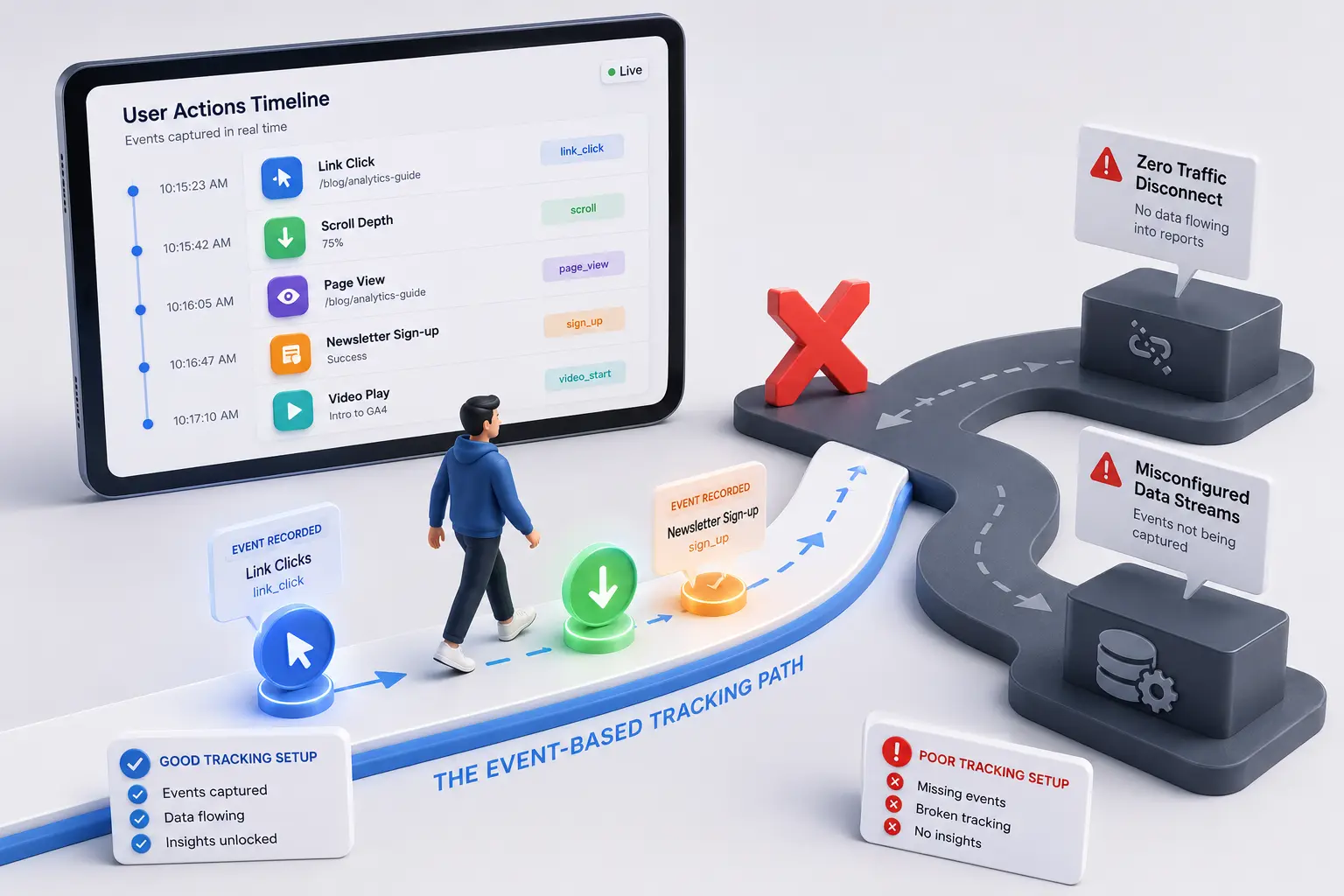
How to Read Google Analytics 4: A Beginner Guide
GA4 looks like a foreign language until you know where the numbers actually live.

Email Marketing Basics for Content Creators
The only audience a platform can't delete overnight is the one whose email addresses you actually own.

Structure a Blog Homepage for AdSense Approval
A reviewer decides whether your homepage looks legitimate before they've read a single sentence of your actual content.